The School LENS

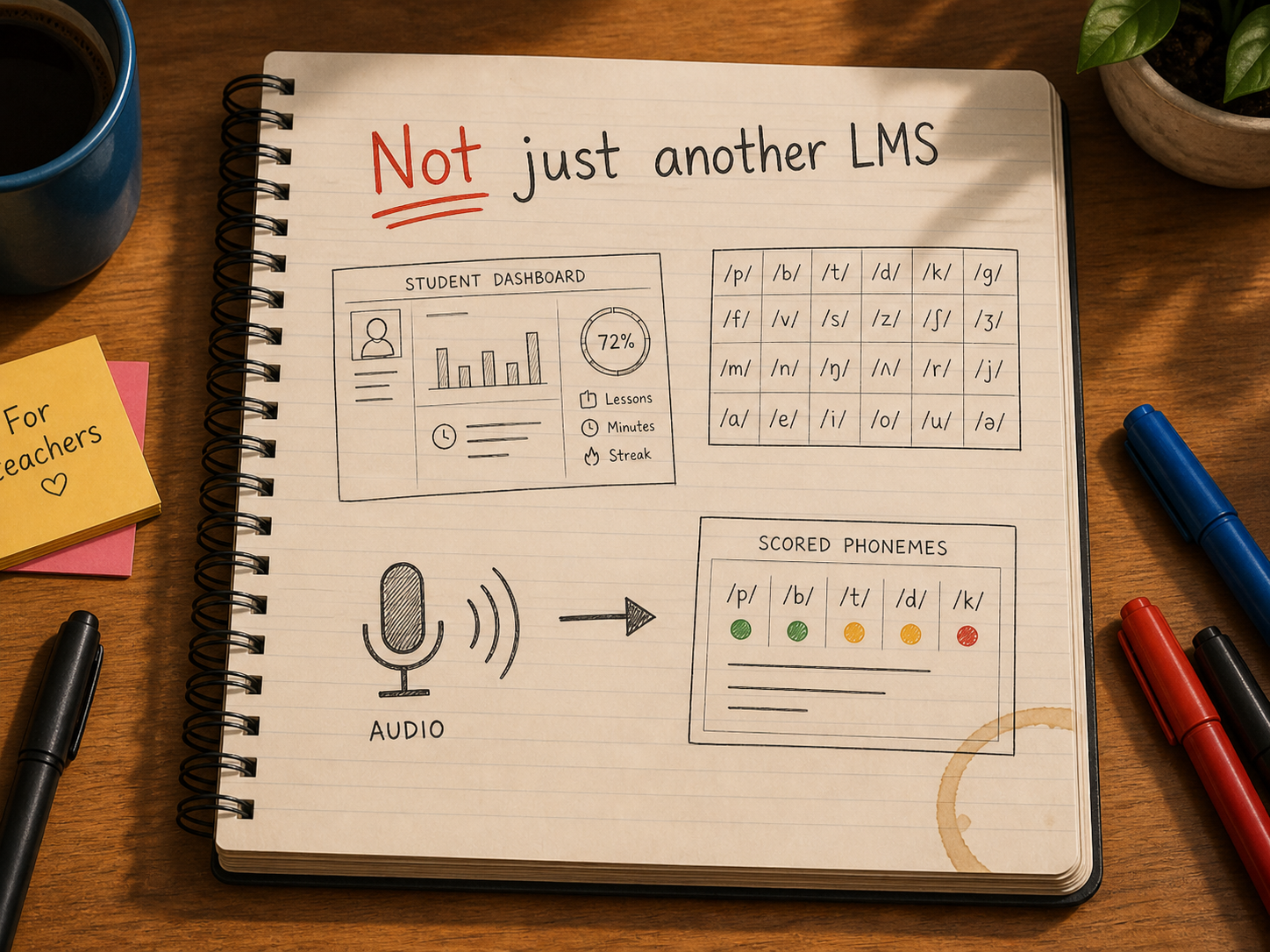
A hand-drawn notebook page reading 'Not just another LMS' — the word 'Not' is underlined in red ink. The notebook shows sketches of a student dashboard, a phoneme chart, and an audio-to-scored-phonemes flow, with a coffee cup, a sticky note reading 'For teachers', and pens scattered around it.
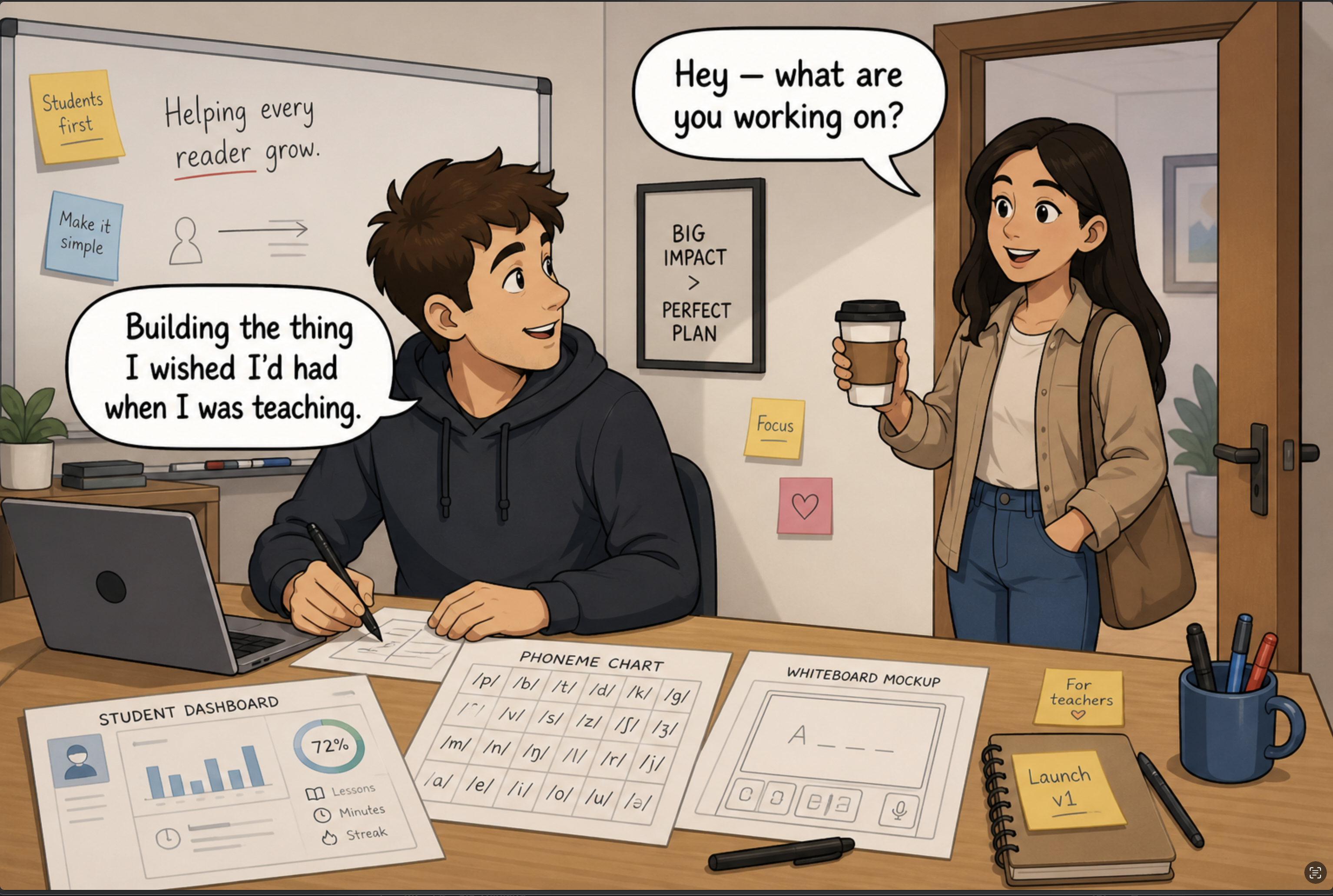
A young teacher at his desk, sketching ideas on paper next to a phoneme chart and a student dashboard mockup. A friend stands in the doorway holding a coffee, asking 'Hey — what are you working on?' He answers, 'Building the thing I wished I'd had when I was teaching.'

Twenty five years in classrooms. Online schools, brick-and-mortar schools, schools that no longer exist. The platforms always served the org chart. Rarely the teacher.
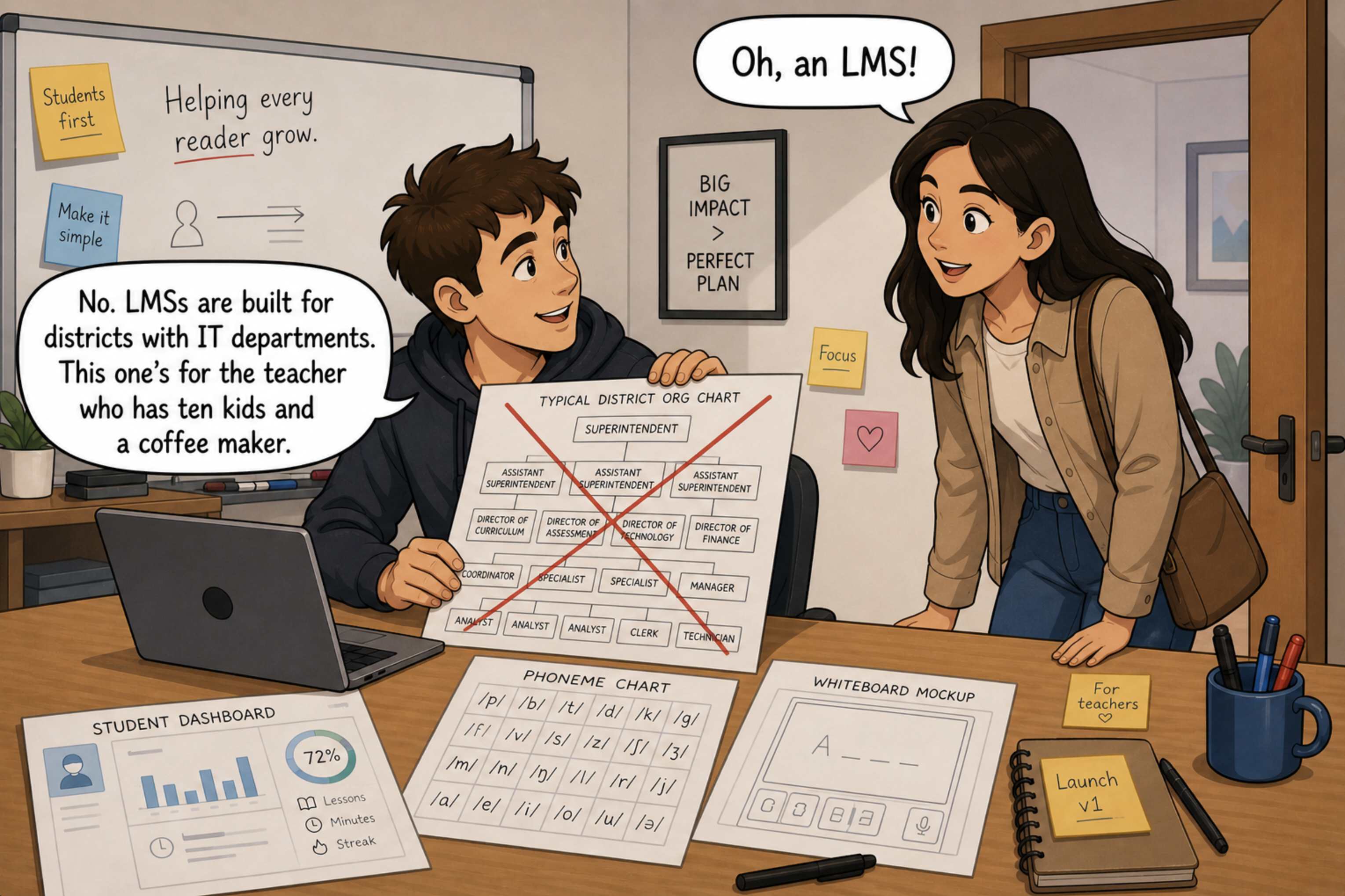
The teacher holds up a typical district org chart — superintendent, assistant superintendents, directors, coordinators — and crosses it out with a red X. The friend, surprised, says, 'Oh, an LMS!' He replies, 'No. LMSs are built for districts with IT departments. This one's for the teacher who has ten kids and a coffee maker.'

L · E · N · S — because the job was never to manage learning. It was to see it.
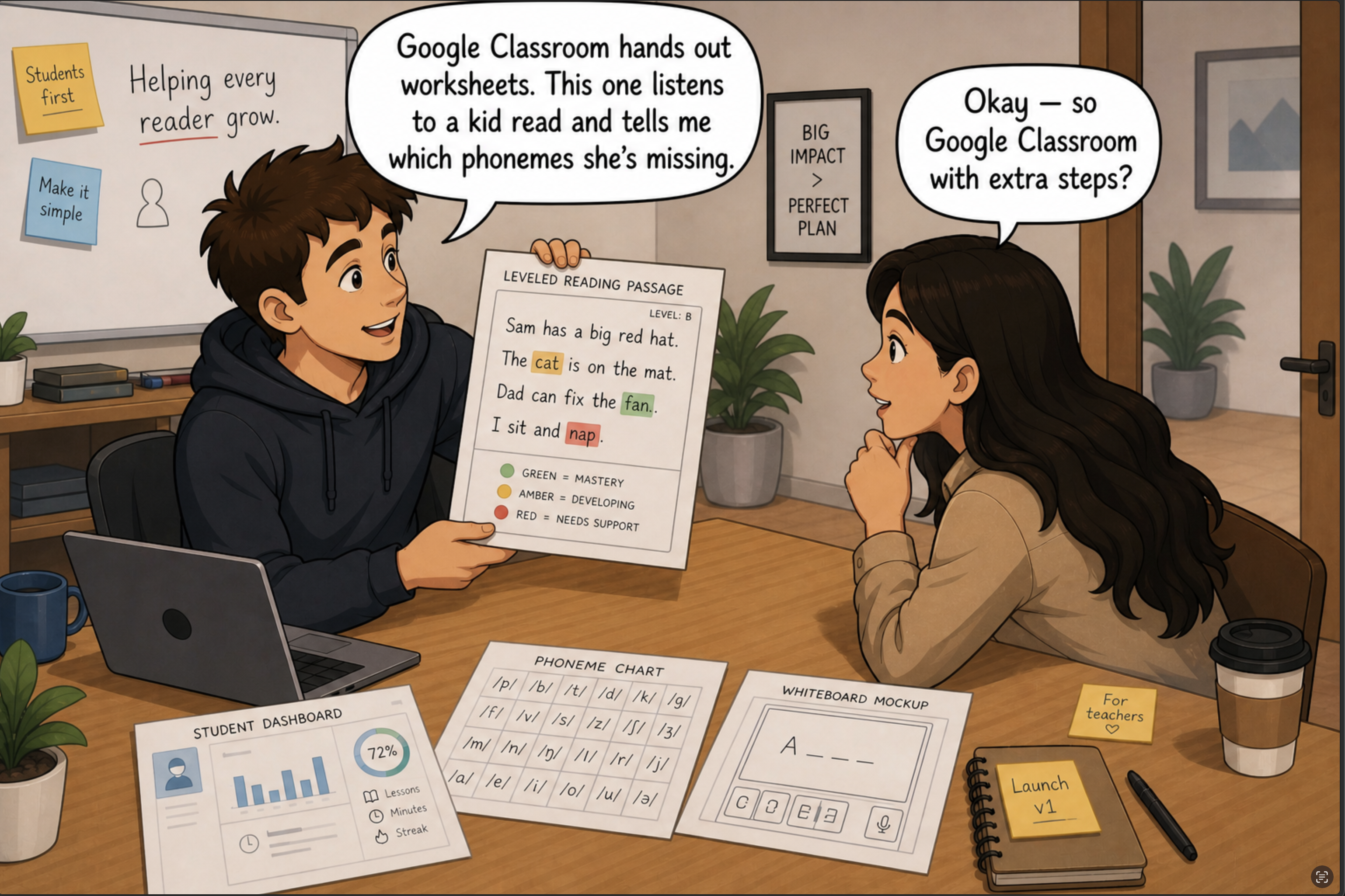
The teacher holds up a leveled reading passage with words highlighted in green, amber, and red, explaining: 'Google Classroom hands out worksheets. This one listens to a kid read and tells me which phonemes she's missing.' The friend, intrigued, asks, 'Okay — so Google Classroom with extra steps?'

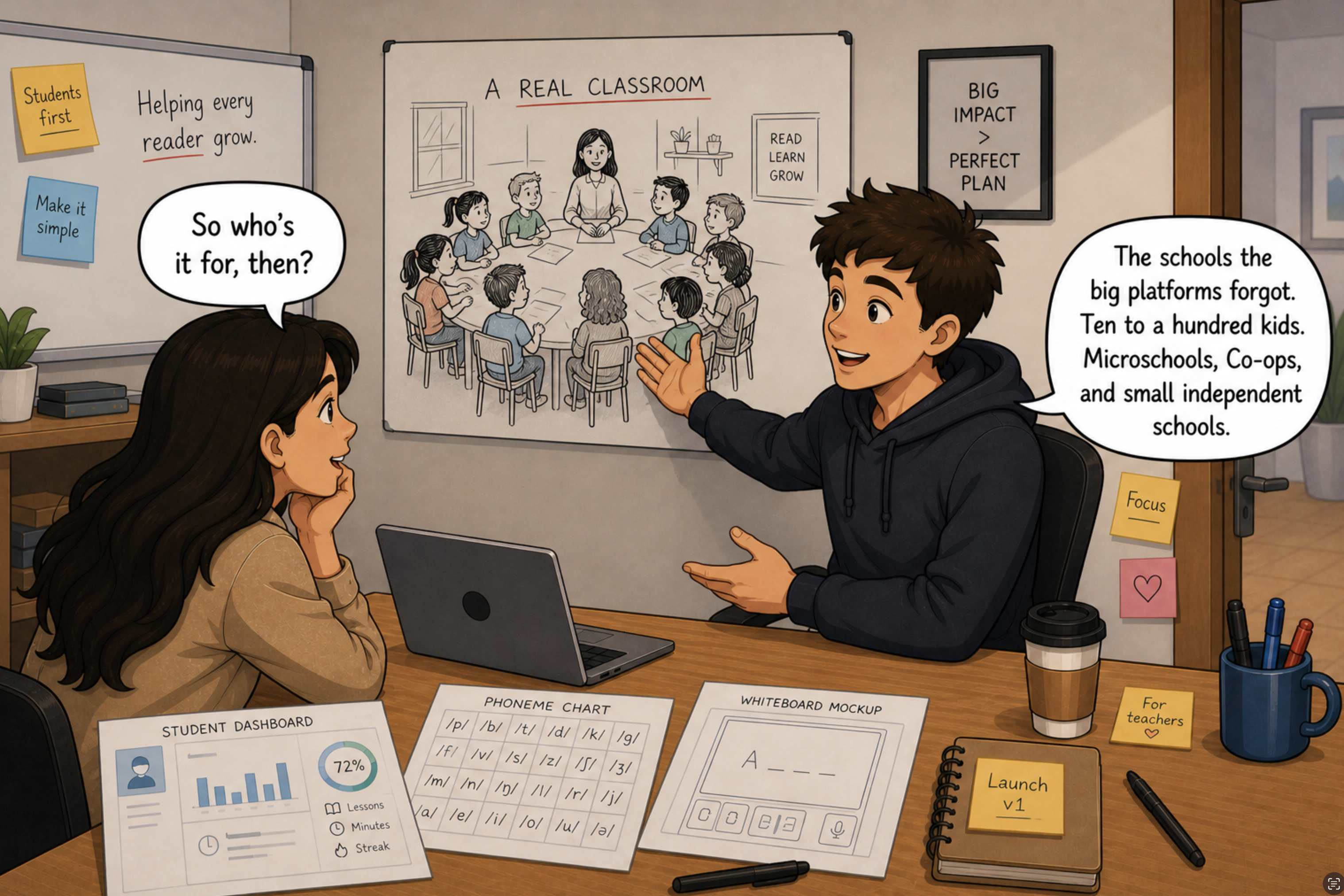
Ten to a hundred students. One teacher who teaches, registers, bills, and writes the parent updates. The schools the big platforms forgot.
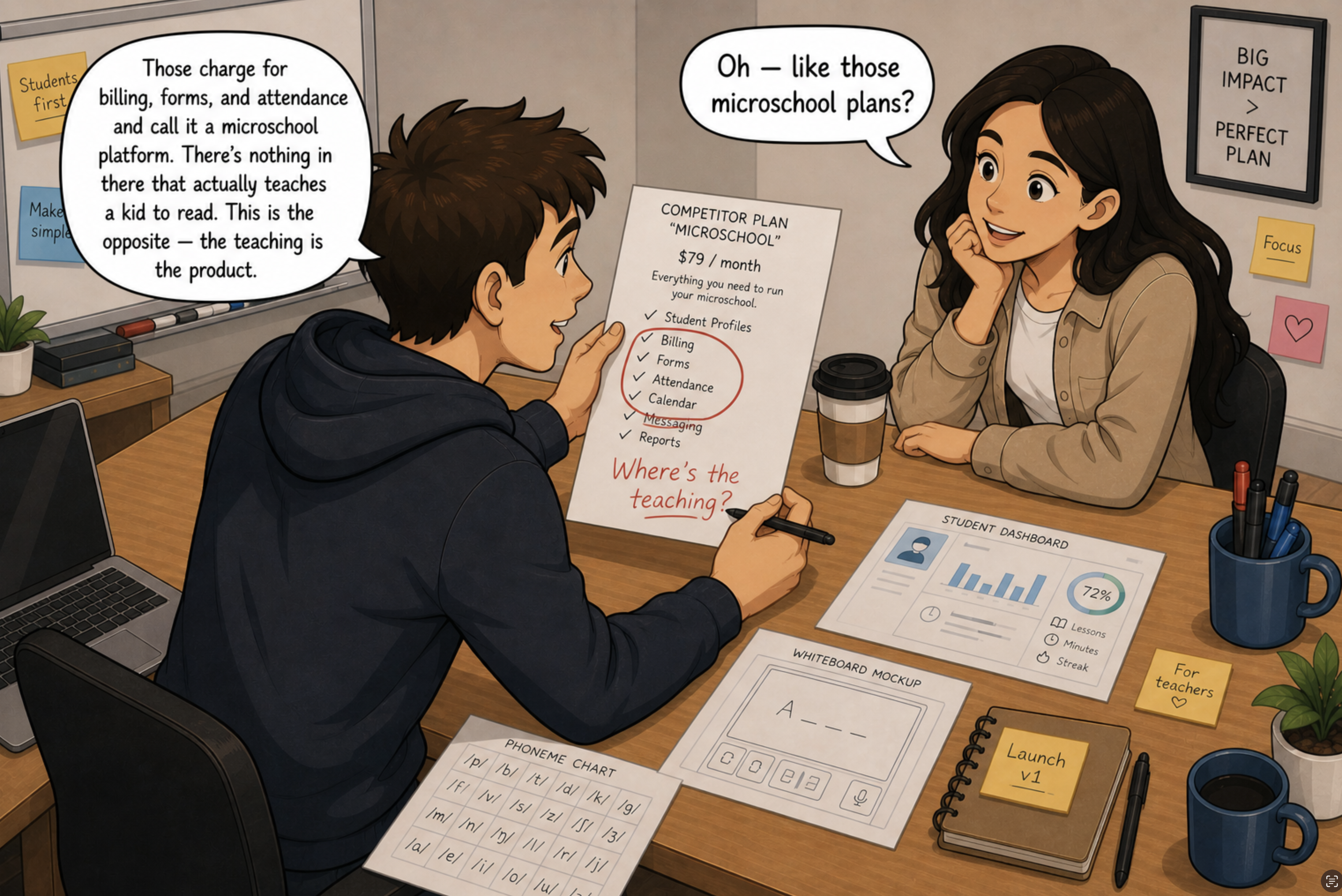
The teacher gestures at a tangle of laptop screens — a generic LMS, a spreadsheet, a clunky gradebook — open across the desk. The friend leans in, sceptical, as the teacher contrasts spreadsheet-software with a tool built around teaching.

Spreadsheets dressed up as software. The teaching is somewhere else — usually a stack of eight other tabs.
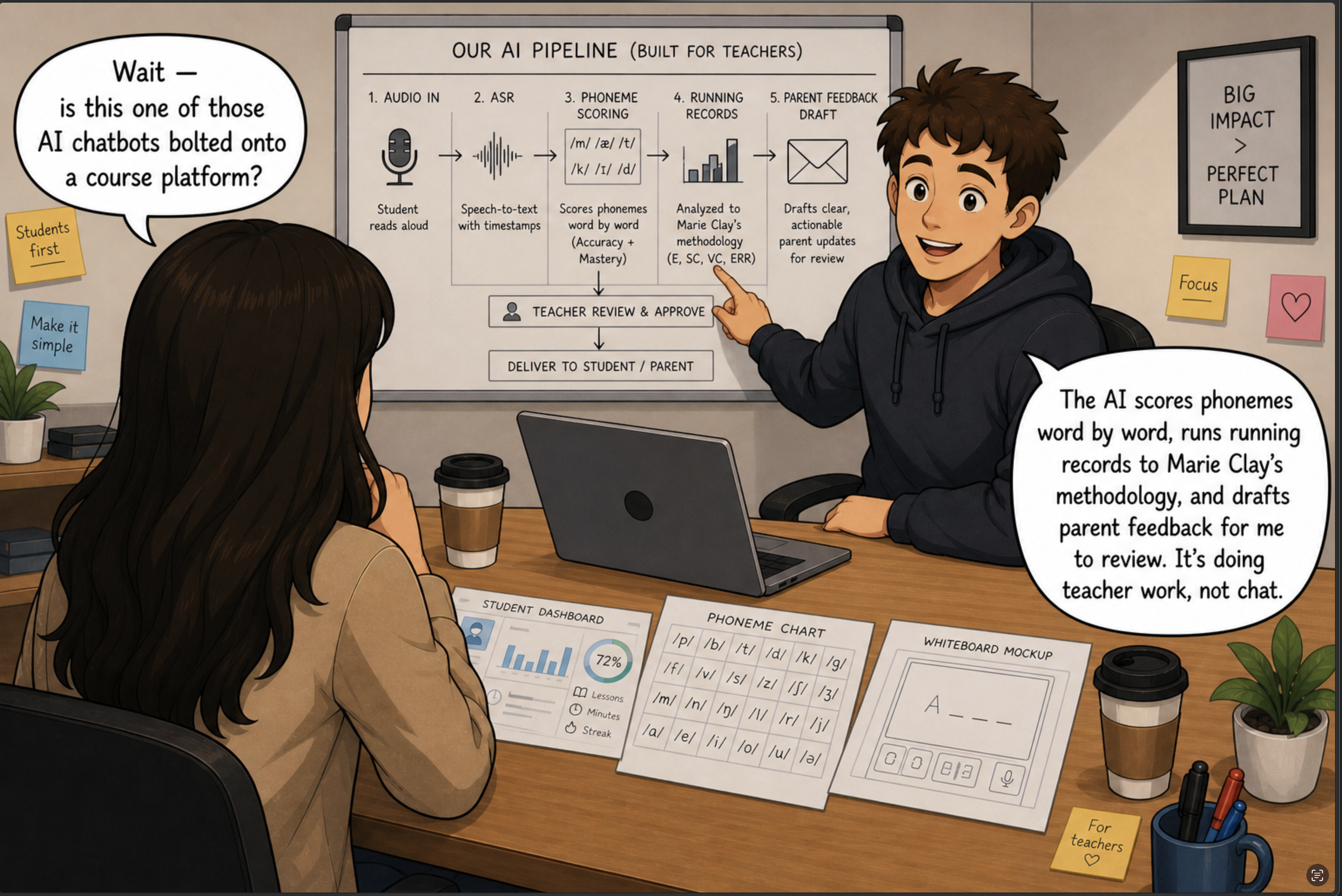
On the laptop, a waveform of a child's voice is being analyzed alongside Marie Clay-style running record annotations. The teacher explains how the speech recognition runs in Europe and the running records are produced automatically; the teacher decides what is shared with parents.

Speech recognition, Socratic discussions about understanding, Marie Clay's running records, automated. The teacher decides what goes home.
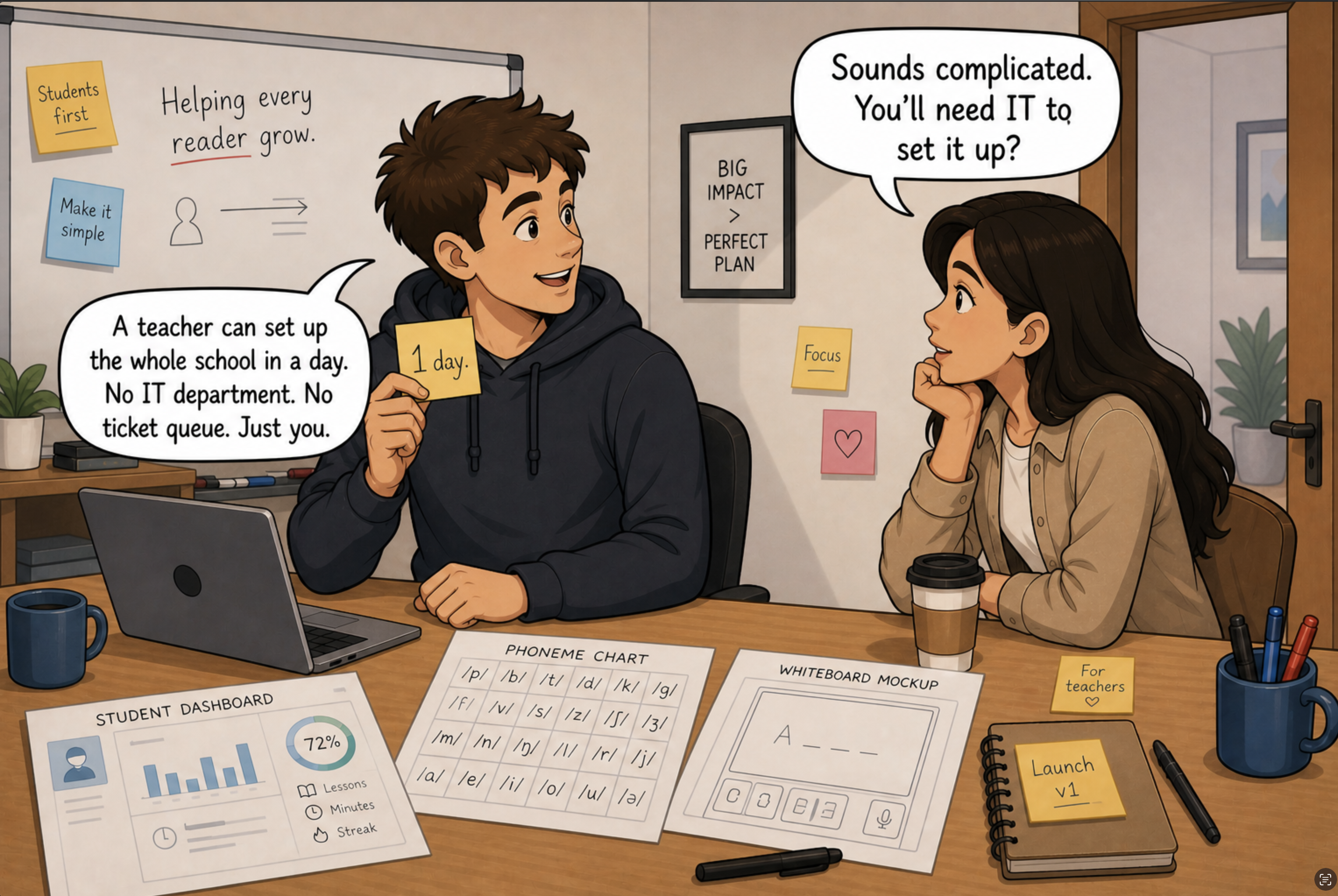
A simple weekly calendar on the desk reads 'Monday — roster' and 'Friday — first lesson live.' The teacher tells the friend that there is no kickoff call, no deployment plan, and no professional services invoice.

Roster on Monday. First lesson live by Friday. No deployment plan, no kickoff call, no invoice for “professional services.”
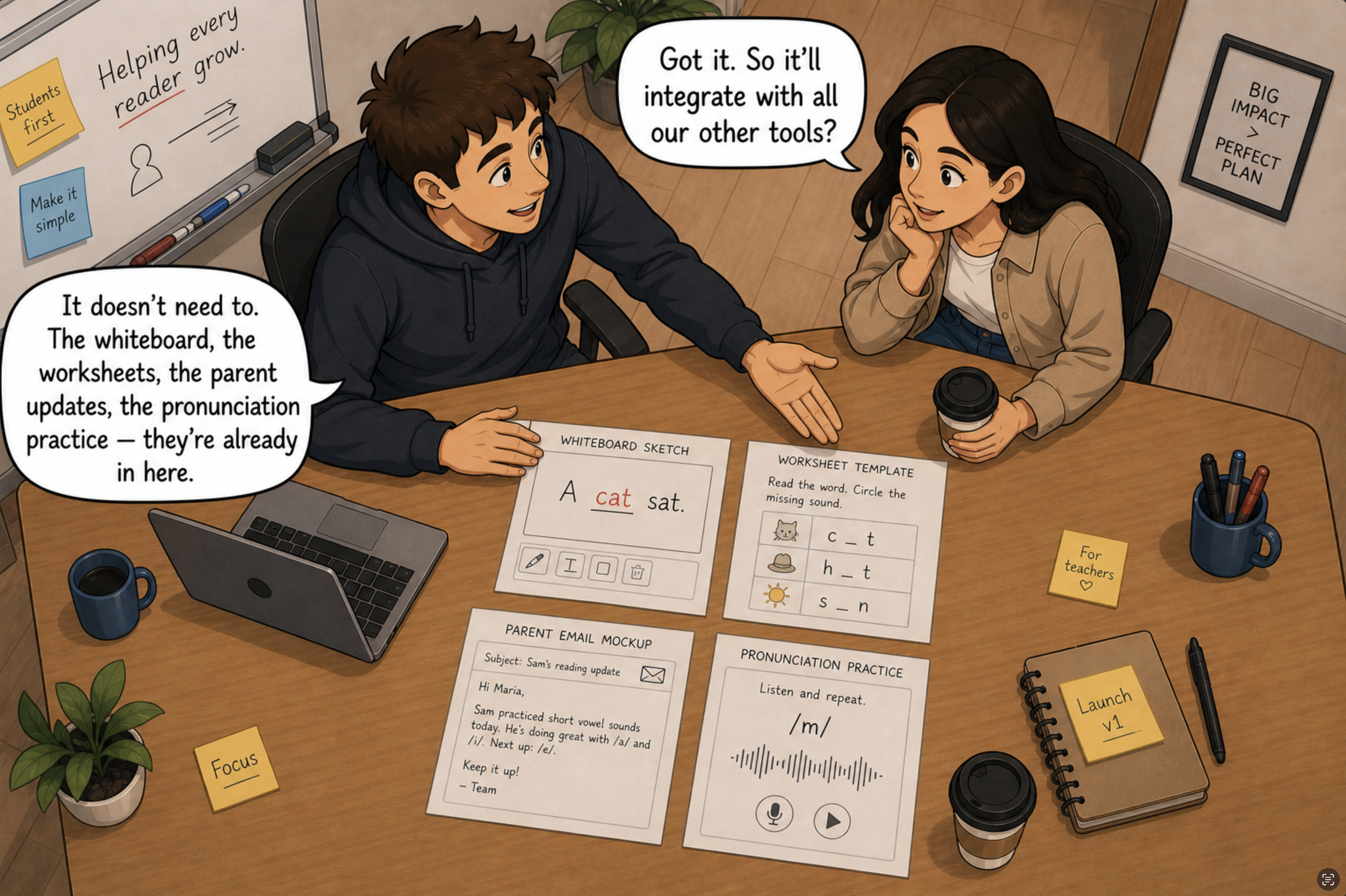
The whiteboard, the worksheets, the parent emails, and the phoneme practice all collapse into a single laptop screen labelled LENS. The teacher holds up one finger: 'One login.'

The whiteboard, the worksheets, the parent updates, the phoneme practice — already in here. One login.
Side-by-side mock screens: Google Classroom with a stack of worksheets vs. LENS with a dashboard listening to a student read. The teacher explains that LENS hears what the reader cannot yet pronounce.

Google Classroom delivers worksheets. LENS listens to your reader and tells you what she can't yet hear.
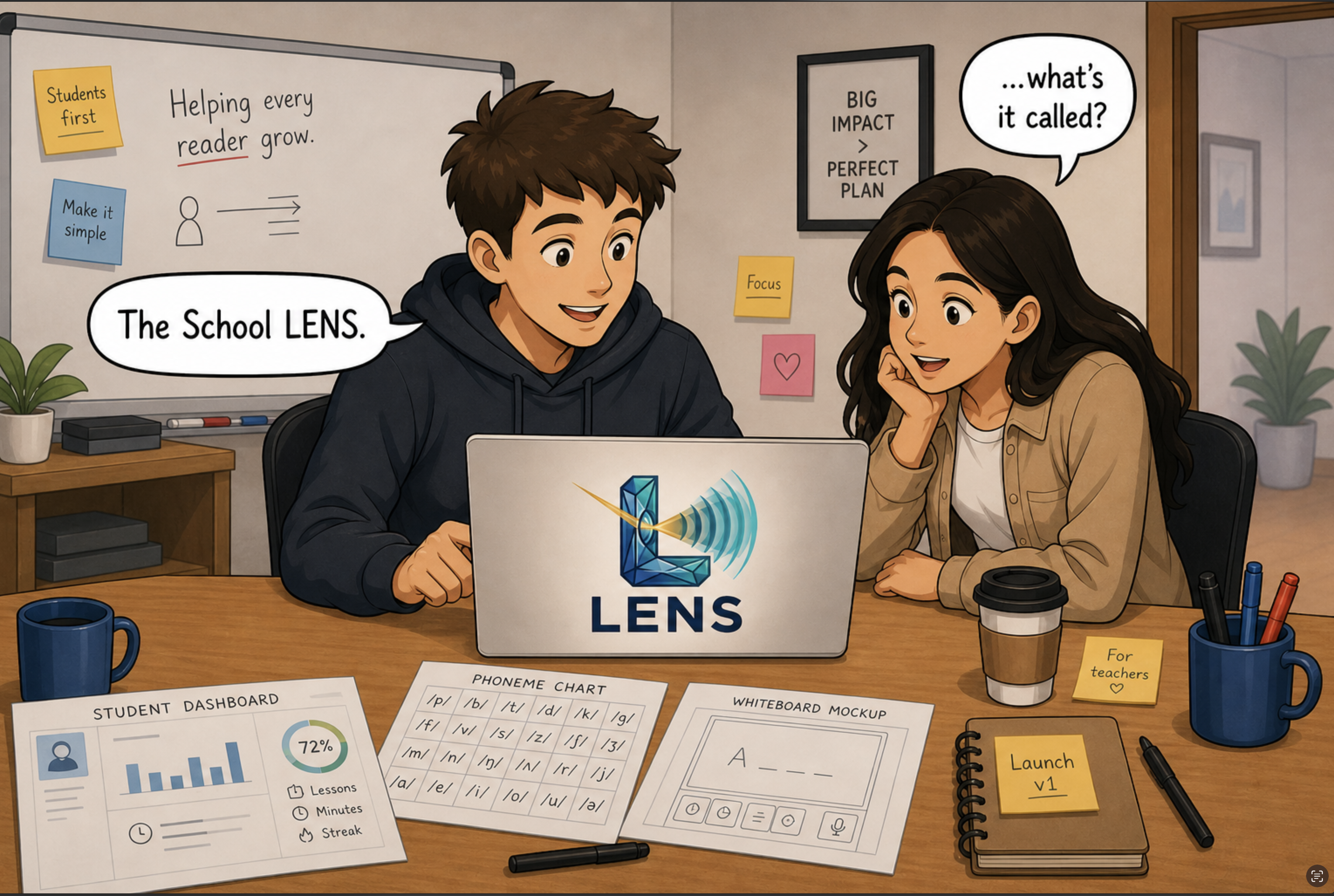
The laptop now displays the LENS wordmark with a blue lens icon. The teacher leans back and says, 'The School LENS.' The friend, smiling, asks, '...what's it called?'

We're calling it The School LENS.

Built by a teacher. For the schools the big platforms forgot.

See how LENS runs a microschool

theschoollens.com

APPLY for founding school access for 2027-27.